Low Electrification Rate Hurts Competitiveness: Why Europe Must Accelerate Energy Transition
Keywords
Electrification Rate, Europe Competitiveness, Energy Transition, Birol, China-Japan-South Korea Experience, Economic Sovereignty
Introduction
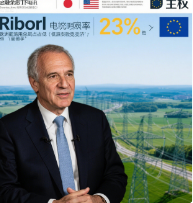
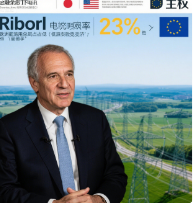
In today's profound reshaping of the global energy landscape, the level of electrification has become a key indicator of an economy's modernization and competitiveness. IEA Executive Director Fatih Birol recently warned in an interview with the Financial Times that the EU's current electrification rate is only about 23%, far below the level needed to achieve carbon neutrality goals, and directly constraining Europe's economic sovereignty and global competitiveness. In stark contrast, the electrification rates of China, Japan, and South Korea have exceeded 30%, while the US and other major oil producers, despite abundant fossil fuel resources, have electrification rates comparable to Europe. This reality raises a profound question: Why is the electrification process in Europe, which leads the world in climate ambition, so sluggish? Based on Birol's warning, this article delves into the deep causes of Europe's low electrification rate, discusses its erosion of economic sovereignty, and draws on the successful experiences of China, Japan, and South Korea to provide feasible paths for Europe's energy transition.
1. Europe's Electrification Dilemma: Structural Constraints Behind the Data
The 23% electrification rate cited by Birol means that less than a quarter of the EU's total energy consumption comes from electricity, with the rest heavily dependent on hydrocarbons such as oil, natural gas, and coal. This ratio has stagnated over the past decade, creating a huge gap with the EU's declared 'Green Deal' goals. More worrying is that Europe is not short of renewable energy resources—North Sea wind power and Southern European solar potential are enormous—but the terminal consumption structure of the energy system has not fundamentally changed.
The primary cause of this dilemma is the peculiarity of Europe's industrial structure. Europe has a large number of heavy chemical industries with high energy consumption, such as steel, chemicals, and cement. The decarbonization technologies for these sectors are not yet mature, and the cost of replacing fossil fuels with electricity is extremely high. For example, steel production currently relies mainly on coking coal. Electric arc furnace steelmaking exists, but scrap steel supply is limited and requires green electricity to achieve net-zero emissions. In addition, the energy efficiency of Europe's existing buildings is low, and old heating systems still rely on natural gas and fuel oil, with heat pumps and other electric heating equipment penetration far behind Nordic countries.
Second, Europe's power grid infrastructure is aging and lacks interconnection. The electricity markets of EU member states are highly fragmented, with insufficient cross-border transmission capacity, preventing renewable-rich regions (such as Danish wind power) from effectively transmitting to demand centers (such as German industrial areas). This 'curtailment' phenomenon not only wastes resources but also discourages investment in electrification infrastructure.
2. How Low Electrification Rate Erodes Europe's Economic Sovereignty
Birol's warning is not alarmist. The electrification rate is closely related to energy self-sufficiency, technological sovereignty, and industrial competitiveness. Europe pays huge sums annually to import oil and natural gas. During the 2022 energy crisis, the EU's dependence on Russian natural gas once made its geopolitical decisions hostage. Even after sanctions and diversification efforts, Europe still imports large amounts of hydrocarbons from the Middle East, North Africa, and Norway. This external dependence not only causes current account deficits but also puts Europe in a passive position in global geopolitical games.
If the electrification rate could be raised to over 30%, a power system dominated by renewable energy would significantly reduce the need for fossil fuel imports. According to IEA estimates, every 1 percentage point increase in electrification rate could reduce the EU's natural gas imports by about 5 billion cubic meters. More importantly, the electrification process will spawn a new technological ecosystem: industries such as smart grids, energy storage systems, electric transportation, and heat pumps will become new economic growth poles for Europe. However, the current low electrification rate means limited market scale for these industries, making it difficult for European enterprises to achieve economies of scale in global competition.
Take electric vehicles as an example. Although the EU has set a target to ban the sale of new petrol and diesel cars by 2035, the deployment of charging infrastructure lags far behind China. China has built the world's largest charging network, and its electrification rate exceeding 30% provides a solid foundation for electric mobility. In contrast, many parts of Europe have insufficient charging station density and grid capacity to support large-scale fast charging. This 'chicken-and-egg' dilemma is weakening Europe's leading position in electric mobility, while China and South Korea have captured the high end of the industry chain through first-mover advantages.
3. Experiences of China, Japan, and South Korea: How Electrification Becomes a Competitive Weapon
Birol specifically named the three economies with electrification rates exceeding 30%: China, Japan, and South Korea. How did they achieve this? First, these countries have elevated electrification to a national strategy. China explicitly proposed in its 14th Five-Year Plan to increase the share of electricity in terminal energy consumption, and systematically advances through UHV transmission, distributed photovoltaics, and electric vehicle subsidies. Japan, despite wavering after the Fukushima nuclear accident, has consistently adhered to the vision of an 'electrified society' and maintained global leadership in heat pumps, efficient home appliances, and hydrogen utilization. South Korea, leveraging its advantages in semiconductors and battery technology, closely integrates electrification with digital transformation; its smart grid and V2G (vehicle-to-grid) technologies have entered the commercial demonstration stage.
Common success factors include: strong policy drive — creating positive incentives through carbon pricing, energy efficiency standards, and direct subsidies; cross-sector coordination — integrating power, transportation, buildings, and industry into unified planning; infrastructure construction first — government-led grid upgrades and charging network deployment. For example, China's State Grid has cumulatively invested over RMB 3 trillion in the 'West-to-East Power Transmission' project, enabling cross-province clean energy dispatch. This long-termist investment is relatively lacking in Europe—investment decisions there are often constrained by annual budget cycles and member states' fragmented approval processes.
4. Europe's Breakthrough Path: From 'Slow Consensus' to 'Accelerated Action'
Europe is not unaware. The European Commission has launched the 'REPowerEU' plan aimed at accelerating renewable energy deployment and electrification. But to truly turn the situation around, Europe needs to take more transformative actions:
First, break the fragmentation of the electricity market. Europe should achieve full grid interconnection as soon as possible, eliminating cross-border transmission bottlenecks. Revenues from the Carbon Border Adjustment Mechanism (CBAM) should be earmarked for grid infrastructure investment. At the same time, reform electricity market design to digest the volatility of renewable energy through demand response and energy storage systems, rather than simply curtailing power.
Second, comprehensive electrification of end-use sectors is necessary. In the building sector, mandate the phase-out of fossil fuel boilers and promote heat pumps and smart temperature control systems; in transportation, unify charging standards and accelerate public charging pile deployment; in industry, provide demonstration project subsidies for electric arc furnace steelmaking and electrified chemical processes. Germany, France, and other countries have proposed 'climate contract' systems that offer long-term green power purchase agreements to enterprises, reducing electrification costs.
Third, develop a 'Electrification+' new industrial ecosystem. Europe should leverage its advantages in digitalization and automation to combine electrification with AI and the Internet of Things. For example, the EU's 'Digital Europe' program should integrate smart energy management modules to enable two-way interaction among homes, factories, and the grid. In addition, Europe should increase R&D investment in frontier technologies such as solid-state batteries, high-temperature heat pumps, and electrochemical synthetic fuels to seize the high ground in next-generation electrification technologies.
Conclusion
Birol's warning sounds like a wake-up call for Europe, which has been basking in the reputation of a climate pioneer. The 23% electrification rate is not just a technical number; it reflects institutional rigidity, insufficient investment, and lack of consensus on the energy transition path. When China's over 30% electrification rate supports the world's largest electric vehicle market and densest charging network, when South Korea and Japan use electrification as a cornerstone of industrial upgrading, if Europe continues to linger in the low-electrification quagmire, it will not only miss the carbon neutrality target but also lose economic sovereignty and global competitiveness.
Electrification is not a choice but a race for the future. Europe needs to break down barriers between member states, translate political consensus into real investment, and turn climate ambition into executable industrial policies. Only then can Europe truly transform from 'fossil fuel dependence' to 'electric power power' and re-establish its position in the green revolution.