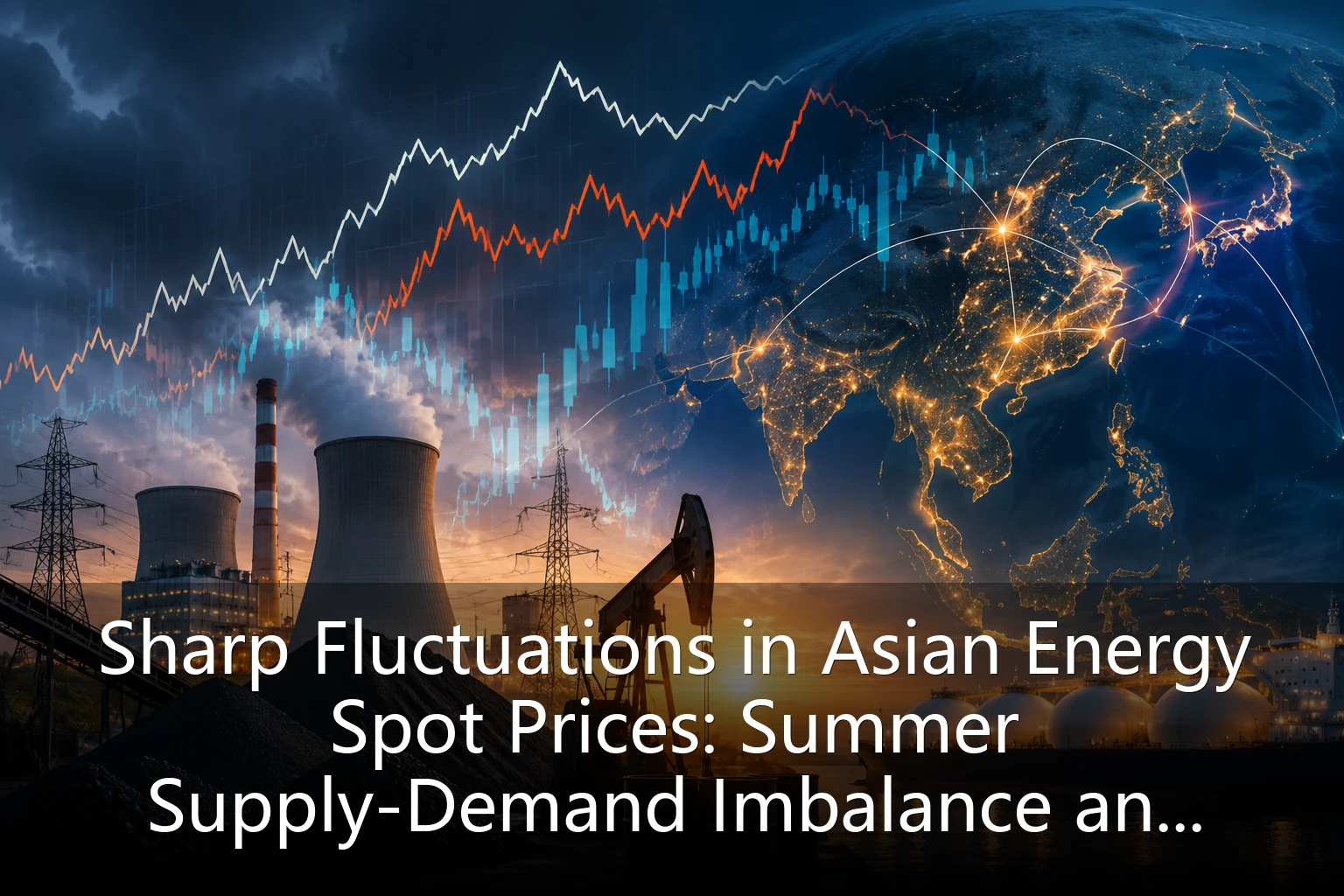
Sharp Fluctuations in Asian Energy Spot Prices: Summer Supply-Demand Imbalance and Geopolitical Games Reshape Market Landscape
In summer 2026, the Asian energy market presented an unprecedented price fluctuation pattern. With accelerated global economic recovery, escalating geopolitical tensions, and continuous advancement of energy transition, spot prices of major energy products such as electricity, oil, natural gas, and coal in the region showed significant divergence. This price fluctuation not only reflects fundamental changes in the energy market but also reveals deep-seated challenges and opportunities for Asian energy security.
Electricity Prices: Summer Peak Demand and New Energy Grid Integration Challenges
The Asian electricity market experienced dramatic fluctuations in summer 2026. According to the latest data, electricity spot prices in Japan, South Korea, and multiple Southeast Asian countries increased by over 20% compared to the previous month, with some regions even reaching historic highs. This phenomenon is mainly due to the combined impact of three factors.
Firstly, frequent extreme weather events have led to surging demand for air conditioning electricity. In summer 2026, many parts of Asia experienced sustained high temperatures, with some areas breaking historical records, driving significant increases in air conditioning electricity demand from residential and commercial sectors. According to statistics from the Asian Power Exchange, in July alone, air conditioning electricity loads in major Asian cities grew by more than 15% year-on-year.
Secondly, the challenges of renewable energy generation instability have become increasingly prominent. Although the installed capacity of solar and wind power in Asia continues to grow, cloudy weather and unstable winds in summer have led to renewable energy generation falling short of expectations, forcing grid operators to increase the proportion of traditional fossil fuel generation, thereby raising marginal generation costs.
Thirdly, power grid infrastructure upgrades have lagged behind demand growth. Problems such as aging power grids and insufficient transmission and distribution capacity in many Asian countries have been particularly prominent during peak electricity demand periods. Some regions have had to implement power rationing measures, further pushing up electricity spot prices. Data from the Singapore Electricity Market Authority shows that wholesale electricity prices in the third quarter increased by 35% compared to the same period last year, reaching a five-year high.
Oil Prices: Impact of OPEC+ Policies and Middle East Situations
Different from the general increase in electricity prices, the Asian oil market showed a downward trend with fluctuations in summer 2026. Brent crude prices fell from around $92 per barrel in early June to about $85 per barrel in early August, a drop of more than 7%.
This price trend was mainly influenced by two factors. On one hand, OPEC+ oil-producing countries decided to maintain existing production policies unchanged at the June meeting, while indicating they would flexibly adjust production in the second half according to market demand. This policy stance alleviated market concerns about supply tightness, providing downward pressure on oil prices.
On the other hand, subtle changes in Middle East geopolitical situations also had a significant impact on oil prices. Although tensions around the Strait of Hormuz remained high, diplomatic contacts between the US and Iran increased, and the market reassessed the risk of potential supply disruptions, leading to a decline in geopolitical risk premiums.
However, the Asian refined oil market showed a different price trend from crude oil. Due to insufficient refinery operating rates and changes in regional arbitrage opportunities, gasoline, diesel, and jet kerosene prices in major refined oil export destinations such as Singapore, Japan, and South Korea remained relatively firm, with the price spread between refined oil and crude oil reaching a new high for the year in some areas.
Natural Gas Price Changes: New Landscape in Asian LNG Market
In summer 2026, Asian liquefied natural gas (LNG) spot prices showed significant volatility. By early August, Northeast Asian LNG spot prices reached $14.2 per million British thermal units, an increase of about 30% from the beginning of the year, reaching a two-year high.
This price trend reflects the structural changes occurring in the Asian LNG market. Firstly, the global LNG supply landscape is being reshaped. With continuous expansion of LNG capacity in major exporting countries such as the United States, Australia, and Qatar, global LNG supply capacity has significantly increased. However, regional supply-demand imbalances still exist, especially against the backdrop of strong demand growth in Asia.
Secondly, Asian LNG importing countries are actively seeking supply diversification. Traditional LNG importing大国s such as China, Japan, and South Korea are strengthening cooperation with emerging LNG exporting countries such as Russia, Central Asia, and the Middle East to reduce dependence on specific supply sources. Although this diversification strategy helps enhance energy security, it also increases trading frequency and price volatility in the spot market.
Thirdly, the impact of climate factors on LNG demand is becoming increasingly significant. In summer 2026, some parts of Asia experienced extreme high temperatures and droughts, leading to significant increases in gas-fired power generation demand and decreased hydropower output, further boosting LNG demand. According to data from the International Energy Agency (IEA), Asian LNG power generation demand increased by 18% year-on-year in July.
Coal Price Dynamics: China's Demand Changes and Global Supply Adjustments
Different from the upward trend of oil and gas prices, the Asian thermal coal market showed downward price pressure in summer 2026. The thermal coal price indices in Indonesia's Kalimantan Island and Australia's Newcastle Port fell to $95 and $98 per ton respectively, a decrease of about 10% from the beginning of the year.
This price trend was mainly influenced by factors on both the supply and demand sides. From the supply side, capacity expansion in major coal exporting countries Indonesia and Australia, combined with relatively high inventory levels in major global coal-consuming countries, has resulted in relatively abundant market supply.
From the demand side, China's slowing coal demand growth as Asia's largest coal consumer is a key factor affecting regional prices. In the first half of 2026, China's coal consumption increased by only 3.5% year-on-year, far below the average level of the past five years. This change is mainly due to multiple factors including accelerated energy structure adjustment, increased proportion of renewable energy, and improved energy efficiency.
However, it is worth noting that coal demand in Southeast Asian and South Asian countries still maintained strong growth. Coal imports in countries such as India, Vietnam, and the Philippines continued to increase, partially offsetting the impact of China's slowing demand and providing support for the Asian coal market.
New Price Trends Under the Energy Transition Background
A significant feature of Asian energy price fluctuations in summer 2026 is the increasing linkage between traditional energy and new energy prices. With the increase in renewable energy share and acceleration of energy system transformation, the price correlation between different energy varieties is undergoing structural changes.
On one hand, the continuous decline in renewable energy generation costs is reshaping the price formation mechanism of the entire energy market. The generation costs of renewable energy represented by solar and wind power have decreased by about 40% in the past five years, making them the most economical power choice in many regions. This change is having a profound impact on the market share and price formation mechanism of traditional fossil fuel generation.
On the other hand, the development of energy storage technology is changing the price fluctuation characteristics of the electricity market. With the decline in battery storage costs and increase in installed capacity, the price volatility of the electricity market is expected to decrease, and the peak-valley price difference may narrow. However, before large-scale application of energy storage, the intermittence of renewable energy generation will still lead to significant fluctuations in electricity spot prices.
In addition, the promotion of carbon pricing mechanisms is also affecting the formation of energy prices. With the establishment and improvement of carbon markets in many Asian countries, carbon emission costs are gradually being internalized into energy prices, pushing up the relative prices of high-carbon energy and lowering the relative prices of low-carbon energy. This trend will accelerate in the coming years, reshaping the regional energy price landscape.
Outlook on Future Trends of Asian Energy Spot Prices
Looking forward to the second half of 2026 and beyond, Asian energy spot prices will be jointly influenced by multiple factors, showing complex and changing trends.
In the short term, seasonal factors and geopolitical risks will remain the main factors affecting energy price fluctuations. With the arrival of autumn, temperatures in Asia gradually decrease, air conditioning electricity demand decreases, and electricity prices may fall. Meanwhile, increased heating demand in winter will boost natural gas and coal demand, potentially causing these energy prices to rebound in winter.
In the medium term, the acceleration of energy transition will have a profound impact on energy prices. With the increase in renewable energy share, improved energy efficiency, and strengthened demand-side management, the growth rate of Asian energy demand may slow down, and the upward pressure on prices of some energy varieties will ease. However, the asynchrony and regional differences in energy transition may also lead to structural differentiation of energy prices.
In the long term, Asian energy prices will gradually align with global energy prices while maintaining regional characteristics. With the improvement of Asian energy market integration and strengthening of regional cooperation, energy price volatility is expected to decrease, but energy security will remain a focus for policymakers in various countries.
For Asian governments and energy enterprises, the key to responding to energy price fluctuations is to enhance the resilience and flexibility of the energy system. This includes developing diversified energy supply, strengthening energy infrastructure construction, promoting energy technology innovation, improving energy market mechanisms, and strengthening regional energy cooperation in multiple aspects.
In summary, the dramatic fluctuations in Asian energy spot prices in summer 2026 reflect the structural transformation the energy market is undergoing. Facing the opportunities and challenges of energy transition, Asian countries need to strengthen policy coordination and market cooperation to jointly build a more secure, sustainable, and efficient regional energy system, providing a solid guarantee for the sustainable development of the economy and society.