
Energy Price Panorama: 2026 Asian Energy Market Overview and Investment Strategies
As the global energy structure continues to transform, Asia, as the world's fastest-growing economic region, has seen its energy market's spot price dynamics become a focal point for investors, businesses, and policymakers. In August 2026, the Asian energy market presents a complex and volatile landscape, with intertwined fluctuations in traditional fossil fuels and renewable energy prices, reflecting the opportunities and challenges in the global energy transition.
Overview of Asian Energy Spot Price Market
The Asian energy spot price market in 2026 exhibits the coexistence of "differentiation and linkage." On one hand, price trends of different energy sources show clear differentiation; on the other hand, various energy prices are influenced by common factors, demonstrating a certain degree of linkage. According to the latest market data, the price fluctuation ranges of major energy sources such as electricity, oil, natural gas, and coal in Asia have expanded compared to previous years, reflecting complex changes in market supply and demand.
In the electricity market, with the arrival of summer peak demand, electricity spot prices in several Asian regions have risen significantly. Particularly driven by both high temperatures and economic recovery, electricity prices in some regions have increased by over 20% compared to the same period last year. This phenomenon not only reflects short-term supply-demand imbalances but also exposes the inadequacy of grid peak regulation capabilities during the energy transition.
Oil Price Volatility and Geopolitical Factors
In 2026, the Asian oil market continues to be significantly affected by geopolitical factors. The ongoing tensions in the Middle East, especially security concerns at the Strait of Hormuz, a global oil transportation chokepoint, have become key factors influencing oil prices. Recently, with the subtle changes in US-Iran relations, Asian crude oil spot prices have shown characteristics of "high volatility and high sensitivity," with Brent crude futures fluctuating frequently in the range of $85-95 per barrel.
Notably, the Asian oil market is undergoing structural changes. On one hand, traditional demand growth has slowed, particularly in major consuming countries like China and India where economic growth has decelerated, leading to slower oil demand growth. On the other hand, new energy substitution is accelerating, with the increasing adoption of electric vehicles further compressing the growth space for oil demand. This structural change has increased the sensitivity of oil prices to short-term supply changes, enhancing price volatility.
Natural Gas Prices Hit New Highs and LNG Market Expansion
In 2026, the Asian natural gas market presents a pattern of record-high prices alongside supply diversification. Influenced by geopolitical factors and changes in the global natural gas supply and demand landscape, Asian LNG spot prices have broken historical highs multiple times in the first half of 2026. Data shows that LNG import prices in major importing countries like Japan, South Korea, and China have exceeded $14/MMBtu, an increase of over 30% compared to the same period in 2025.
Meanwhile, Asian LNG importing countries are actively promoting supply source diversification. On one hand, traditional suppliers like Australia, the United States, and Russia have increased their export volumes to the Asian market; on the other hand, emerging LNG producers like Qatar and Malaysia are expanding their production capacity, attempting to gain a larger share in the global LNG market. Although this supply diversification trend helps alleviate price pressure, it also increases market complexity.
Coal Market: Supply-Demand Rebalancing and Price Volatility
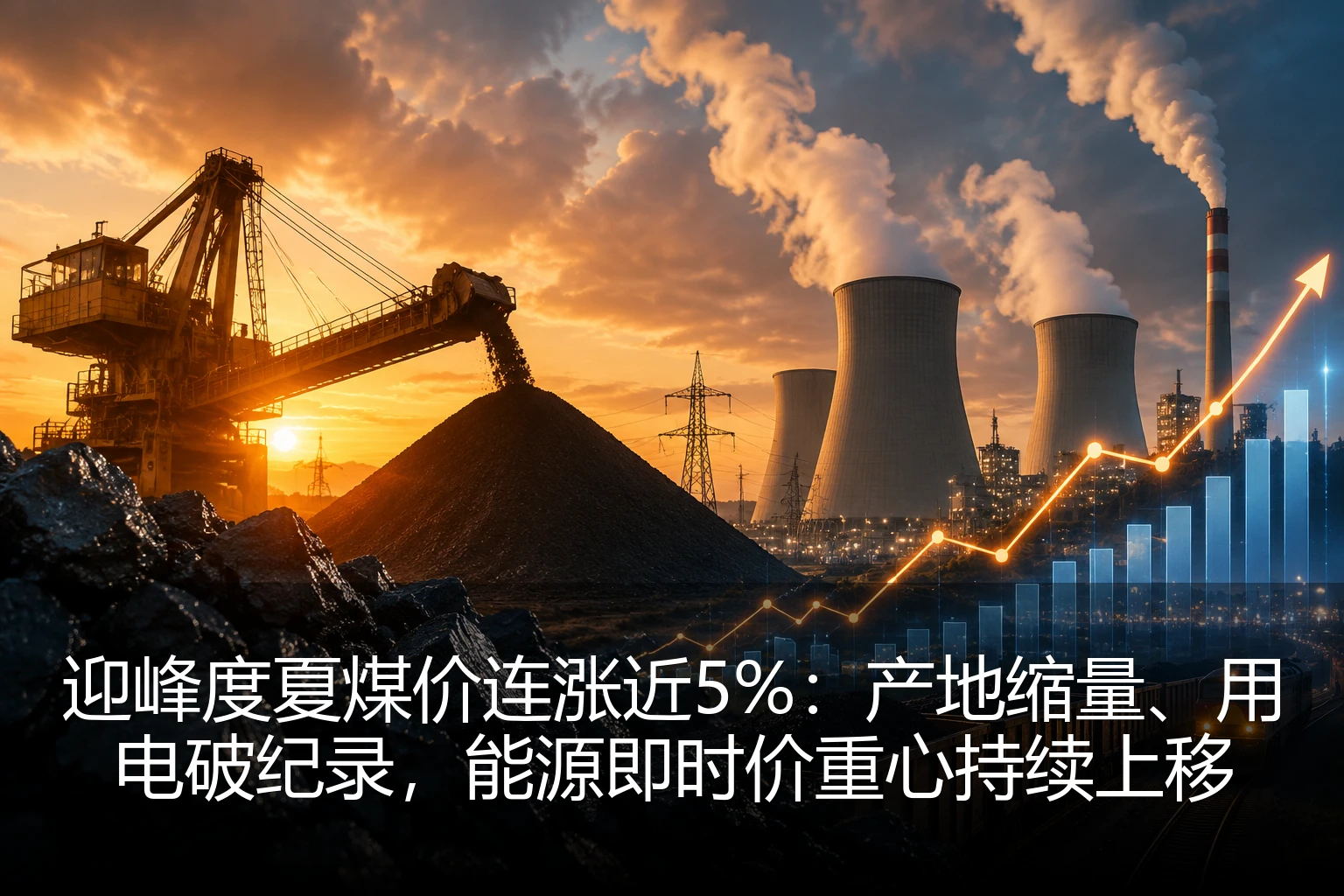
In 2026, the Asian coal market has undergone a supply-demand rebalancing process with significant price fluctuations. On one hand, with the acceleration of global energy transition, several Asian countries have increased restrictions on coal use, leading to slower demand growth; on the other hand, production in major coal exporting countries like Indonesia and Australia has been constrained, maintaining supply-side pressure.
Data shows that in the first half of 2026, Asian thermal coal prices fluctuated in the range of $90-110 per ton, a decrease compared to the same period in 2025 but still at historically high levels. Notably, the "scissors gap" between coal prices and renewable energy generation costs is narrowing, which has accelerated the pace of energy structure transformation in many Asian countries.
Continuously Declining New Energy Prices and Accelerated Energy Transition
In contrast to the price fluctuations of traditional fossil fuels, Asian new energy prices continued to decline in 2026, accelerating the energy transition. Photovoltaic component prices have further decreased by 15-20% compared to 2025, and the levelized cost of electricity (LCOE) for both onshore and offshore wind power has continued to decline, achieving price parity or even falling below traditional energy sources in many Asian regions.
The continuous decline in new energy costs has attracted substantial investment into Asia's renewable energy market. Data shows that renewable energy investment in Asia increased by over 40% year-on-year in the first half of 2026, with solar and wind power dominating. This investment boom has not only driven rapid growth in new energy installed capacity but also promoted the improvement and upgrading of related industrial chains.
Energy Spot Price Query Tools and Investment Decisions
In the face of a complex and volatile energy price environment, accurate and timely energy spot price information has become crucial for businesses and investors to make sound decisions. Modern energy spot price query tools have evolved from simple price displays to comprehensive platforms integrating data analysis, trend prediction, and risk assessment.
Advanced energy spot price query systems typically feature: diversified data sources, integrating multi-source information from exchanges, over-the-counter trading data, and government statistics; powerful analysis capabilities, providing various analytical tools such as price trend analysis, correlation analysis, and volatility analysis; comprehensive early warning functions that promptly alert to abnormal price fluctuations and market risk changes; and customized services that provide personalized data and analysis reports based on user needs.
Impact of Energy Spot Prices on the Industrial Chain
Fluctuations in energy spot prices have profound impacts on the entire industrial chain. For upstream energy suppliers, price fluctuations directly affect the stability of their revenue and profits, prompting companies to focus more on risk management; for midstream energy processing and trading enterprises, price fluctuations create arbitrage opportunities while also increasing operational risks; for downstream energy users, price fluctuations directly affect production costs, encouraging users to pay more attention to energy efficiency and alternatives.
Take the steel industry as an example. As an energy-intensive sector, steel production costs are highly sensitive to energy prices. In the first half of 2026, with fluctuations in coal and electricity prices, production costs for Asian steel companies have changed significantly, driving enterprises to accelerate energy conservation and emission reduction efforts and explore the possibility of using alternative energy sources like hydrogen.
Future Outlook for Energy Spot Price Trends
Looking ahead, Asian energy spot prices will show several trends: increased price volatility, with energy price fluctuations becoming more frequent and intense under the influence of multiple factors including geopolitics, extreme weather, and energy transition; significant price differentiation, with larger divergences in price trends between traditional fossil fuels and renewable energy; weakened price linkage, with different energy prices dominated by different factors and reduced correlation; and improved price transparency, with energy price information becoming more transparent and accessible as energy markets become more digital and intelligent.
In the face of these trends, Asian energy market participants need to focus more on risk management, enhance market analysis capabilities, and actively utilize digital tools to seize market opportunities. At the same time, governments and regulatory agencies need to improve market rules, strengthen market supervision, maintain market stability, and promote the smooth advancement of the energy transition.
Investment Strategies to Capitalize on Energy Spot Price Opportunities
For investors, seizing opportunities from energy spot price changes requires developing scientific investment strategies. First, investors need to focus on the driving factors behind energy prices, distinguishing between short-term fluctuations and long-term trends; second, investors need to build diversified energy investment portfolios, balancing the investment proportions between traditional and new energy; third, investors need to use energy derivative instruments to hedge price risks and lock in investment returns; finally, investors need to pay attention to the impact of policy changes on energy prices and capture policy dividends.
Particularly noteworthy is that under the energy transition background, investment opportunities in the new energy industry chain are increasingly prominent. From upstream equipment manufacturing to midstream power plant construction and downstream operation services, all segments of the new energy industry chain offer abundant investment opportunities. Meanwhile, traditional energy companies are actively transforming into comprehensive energy service providers, and these transitioning companies also deserve attention.
In conclusion, the Asian energy spot price market in 2026 presents complex and volatile characteristics, full of challenges and opportunities. By accurately grasping energy price dynamics and deeply understanding the operational mechanisms of the energy market, investors can achieve substantial returns in the context of the energy transition. At the same time, with the continuous development and improvement of energy markets, energy spot price query tools will play an increasingly important role, providing more precise and timely information support to market participants.