Europe installation cost up to 1500 euros: surging demand for mobile AC
Blue Whale News, June 29 (Reporter Lu Pengpeng) Recently, extreme heatwaves have been sweeping across Europe, with Germany, the UK, France and other places continuously breaking highest temperature records. Multiple countries have issued heat warnings.
In this context, Chinese-made air conditioners and other cooling appliances have become hot products locally. On e-commerce platforms, monthly sales exceed 10,000 units, and offline stores even see shortages.
Over 40°C heatwave persists; multiple European countries issue heat alerts
According to CCTV News, a World Meteorological Organization official said on the 26th that the heatwave that recently swept Western Europe and broke multiple temperature records will continue to spread eastward, affecting the entire European continent.
Data shows that France has been hit by heatwaves for several consecutive days, with temperatures in western France rising to 43°C, the highest ever recorded in France for June. The UK saw its high-temperature record refreshed for three consecutive days from June 24 to 26, reaching 37.3°C on the 26th. On the 26th, over a thousand schools in England and Wales fully or partially closed. In eastern Germany, the Mücken-Drewitz area recorded a temperature of 41.5°C on the 27th, a new high. The persistent heat caused damage to multiple highway surfaces, leading to closures or speed restrictions. The railway department urged people to reduce long-distance travel. Italy also suffered from extreme heat, with the government issuing red heat alerts for 18 cities including Rome, Venice, Florence, and Milan.
Despite record-breaking temperatures, the penetration rate of air conditioning in European countries is far lower than in other major economies, with only about 20% of households equipped with cooling devices.
The reasons are multifaceted. First, historically, European summers, especially in the north, rarely experienced prolonged high temperatures, so demand for AC installation was low. Additionally, to combat climate change, Europe has set green development goals, and some European countries have implemented policies restricting AC use. For example, Spain introduced a regulation in 2022 requiring public places to set AC temperatures no lower than 27°C.
Under heatwave, single AC product sells over 10,000 units monthly; Chinese brands break through with cost-effectiveness
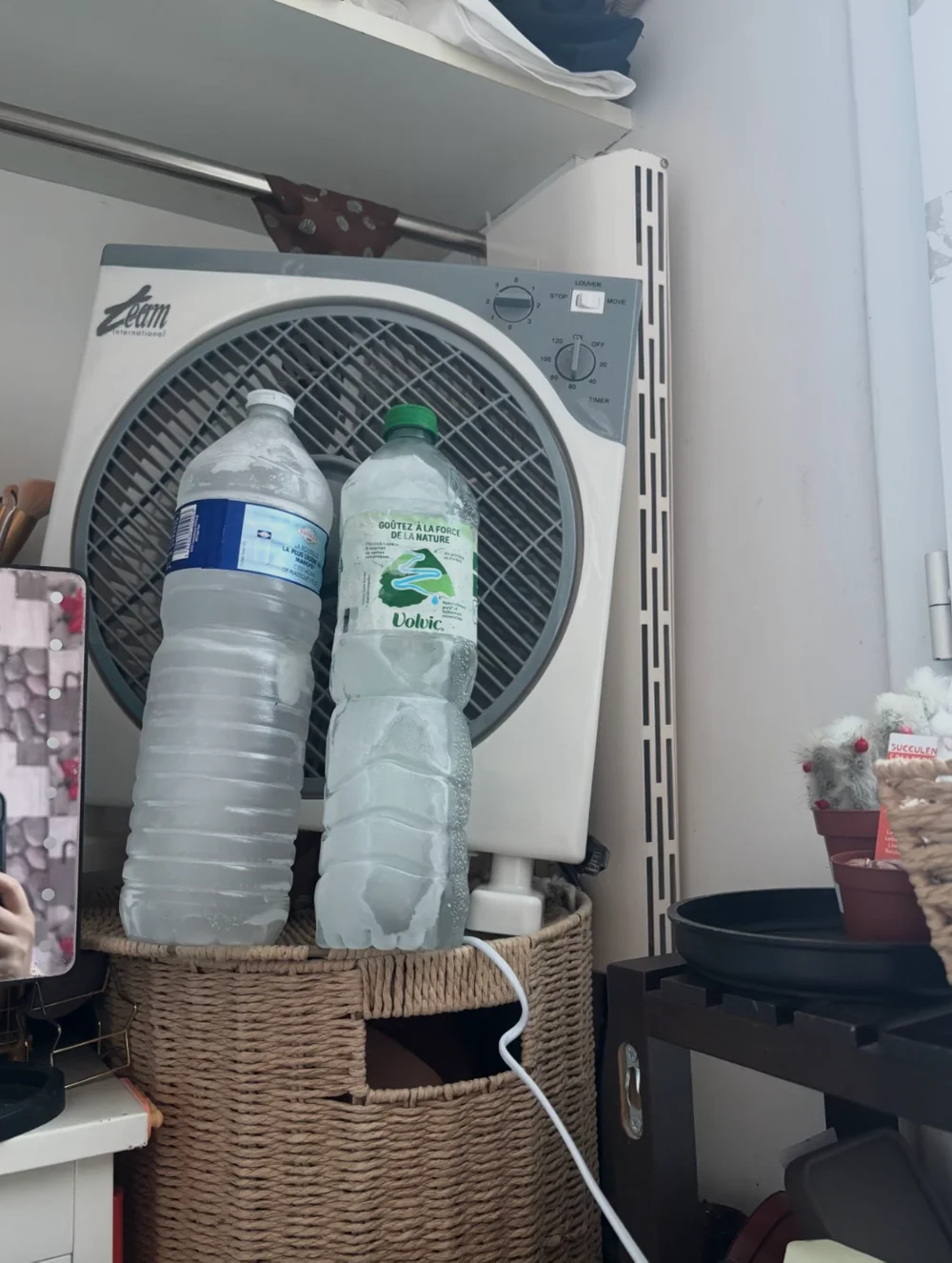
Blue Whale reporter interviewed a Chinese national who has lived in Paris for ten years. He said that Paris has been experiencing continuous high temperatures recently. “Even in past summers, extreme heat like this was rare. Walking on the street, you feel like you’re melting.”
Under the scorching heat, demand for home cooling has surged. In France, the price of ordinary mobile AC ranges from 200 to 500 euros, while split ACs cost about 500 to 1,200 euros.
Checking Amazon France, sorted by best-sellers, the top two are both Midea ACs. One model had over 10,000 purchases in the past month at 166 euros; another had over 7,000 orders at 459 euros.
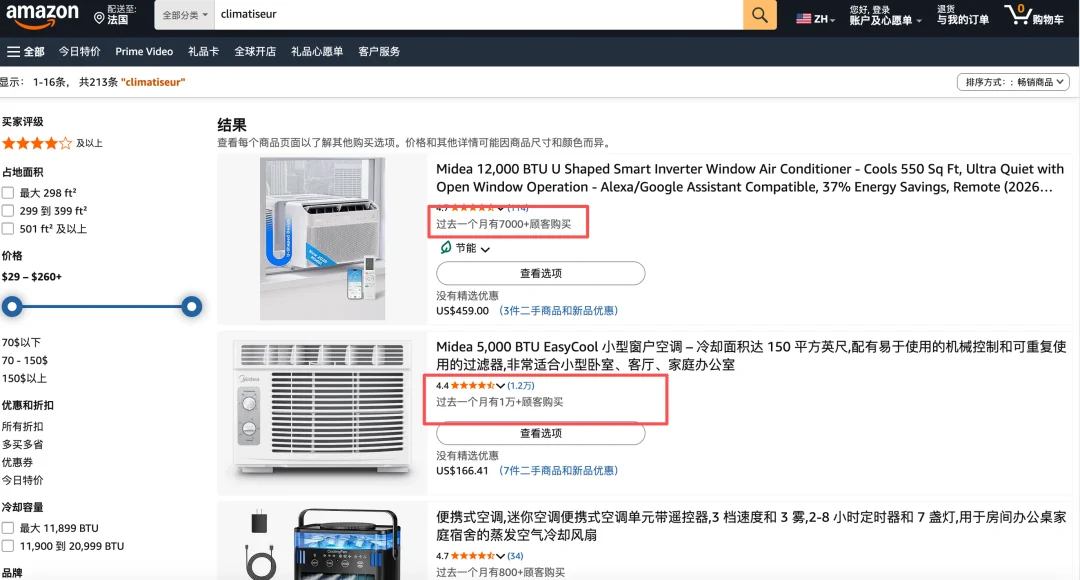
In this heatwave, Chinese-brand ACs have stood out with their cost-effectiveness, becoming the top choice for many local consumers. “Brands like Midea, Haier, and Gree are all available in France. For the same configuration, Chinese brands are generally much cheaper than European, American, and Japanese brands,” the Chinese national told Blue Whale.
According to CCTV News, in the first five months of 2026, China’s exports of household ACs to Western European countries increased by 9.7% year-on-year. Among them, mobile ACs grew particularly sharply, with a year-on-year increase of over 70%. Many companies reported that in several Western European markets, consumers were queuing to buy, and offline stores faced shortages and supply falling short of demand.
“Can afford to buy, but not to install or use”: Installation fee up to 1,500 euros, electricity bills also rising
Notably, buying an AC in Europe is not the hardest part; what really deters consumers is the installation process. The one-time installation cost for a split AC generally ranges from 300 to 1,500 euros, with the highest quotes exceeding the price of the unit itself.
Why are installation costs so high? The local Chinese analyzed for Blue Whale: Most buildings in downtown Paris are decades or even centuries old. Thick old walls make drilling much more difficult than in modern buildings. Additionally, installing outdoor units on high-rise buildings involves high-risk work at heights. Most apartments also require prior approval from the property management and the owners’ association before construction can begin, making the process extremely cumbersome.
At the same time, local installation workers have high hourly rates. With multiple costs combined, split ACs have become appliances that locals “can afford to buy but cannot afford to install.”
Due to the difficulty and high cost of installation, portable mobile ACs have become the preferred cooling option for local residents, especially renters.
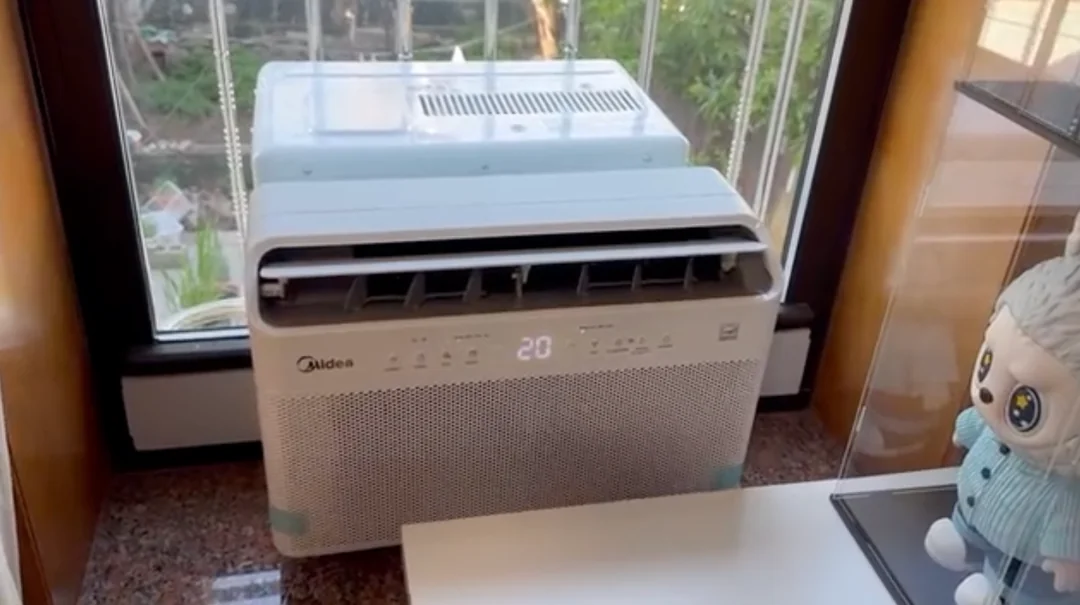
To address issues such as facade protection restrictions and high installation costs when installing ACs in European countries, Chinese companies have introduced customized products. For example, the “Midea U-shaped Smart Inverter Window AC” mentioned above, which sold over 7,000 units, has a U-shaped hollow design that can be fixed into the window gap. After installation, the window can still be opened to a limited extent, perfectly avoiding the high labor costs, property approvals, and difficulty of drilling into old walls in Europe. It is a popular model in the overseas rental market.
It is worth noting that purchasing an AC in Europe is only the first step; subsequent electricity bills are also significant. Local Chinese reported that based on daily use of 6 to 8 hours, a split AC can add 30 to 80 euros to the monthly electricity bill, while a less efficient mobile AC could add 50 to 100 euros.
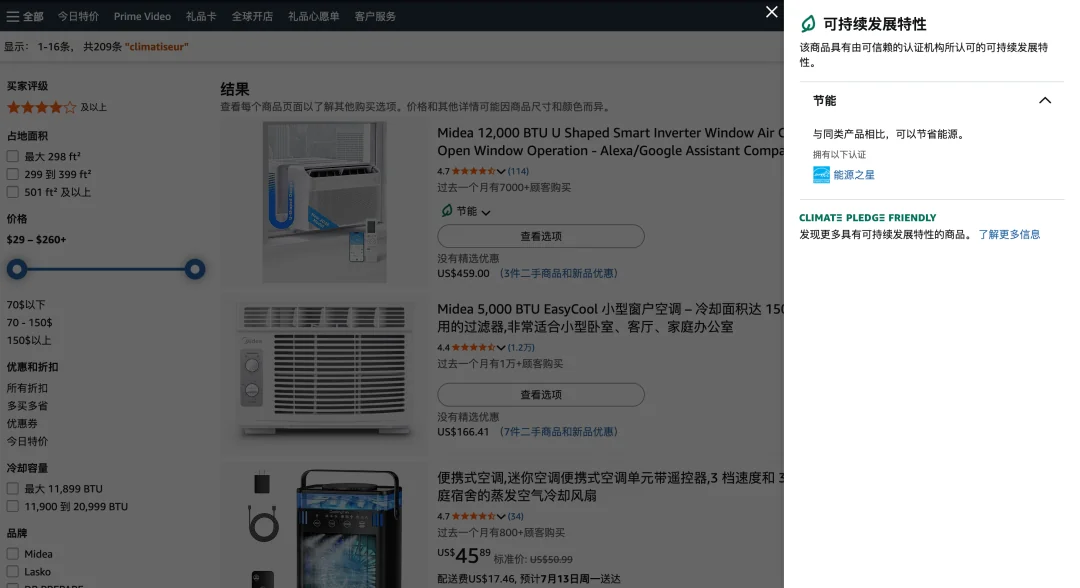
For this reason, energy efficiency has become a core consideration for local consumers when choosing ACs. On e-commerce platforms, high-efficiency energy-saving models from Chinese brands also lead in sales.