
New Asian Energy Market Landscape: Investment Opportunities and Challenges in the Second Half of 2026
As we pass the midpoint of 2026, the Asian energy market is undergoing unprecedented transformation and adjustment. Amidst the interplay of accelerating global energy transition, reshaping geopolitical landscape, and breakthrough technological innovations, the Asian energy market presents a complex and evolving development trend. This article provides an in-depth analysis of the latest dynamics in the current Asian energy market, explores potential investment opportunities and challenges for the second half of the year, and offers forward-looking market insights for investors.
Asian Energy Market in the Context of Global Energy Transition
With the deepening of global carbon neutrality efforts, Asian countries are adjusting their energy strategies and accelerating the transition to clean energy. According to the latest Asian Development Bank report, renewable energy investment in Asia grew by 35% year-on-year in the first half of 2026, reaching a historic high. Major economies such as China, India, and Japan have increased their investments in clean energy sectors including solar, wind, and energy storage.
However, energy transition cannot be achieved overnight. In Asia, traditional energy still dominates, particularly in the power structure where coal-fired generation accounts for over 50%. This "dual-track" energy development model gives the Asian energy market unique transformation characteristics. On one hand, new energy installed capacity continues to grow rapidly; on the other hand, traditional energy still needs to ensure energy security and basic economic development needs.
Energy Policy Adjustments in Major Asian Economies
In the first half of 2026, major Asian economies have adjusted their energy policies to address the dual challenges of climate change and energy security. China has proposed an energy revolution strategy under its "dual carbon" goals, planning to achieve a 25% non-fossil energy share by 2030; Japan has updated its Basic Energy Plan, raising the renewable energy target from 36% to 38%; while India has announced its goal to achieve 500GW of renewable energy installed capacity by 2030.
Meanwhile, countries are actively adjusting energy subsidy policies. China is gradually reducing subsidies for fossil fuels while increasing support for new energy; South Korea has launched a "Green New Deal" plan to invest 120 trillion won in green energy development over the next five years; Southeast Asian countries are attracting foreign investment in renewable energy through tax incentives and streamlined approval processes.
Impact of Geopolitics on the Asian Energy Market
In 2026, geopolitical factors have become increasingly influential on the Asian energy market. The Strait of Hormuz, as the world's most important oil transportation channel, directly affects Asian energy supply through its security conditions. Recent tensions in the Middle East have created supply uncertainties for Asian oil-importing countries, making energy security a core consideration in national energy strategies.
At the same time, regional cooperation mechanisms continue to improve. ASEAN countries are accelerating power grid interconnection projects, planning to build a unified electricity market covering the entire Southeast Asia by 2030; China, Japan, and South Korea are strengthening cooperation in clean energy technology to jointly address climate change challenges. These regional cooperation mechanisms are reshaping the landscape of the Asian energy market.
Competition and Balance Between New and Traditional Energy
In the first half of 2026, the Asian new energy market has shown explosive growth. Photovoltaic installed capacity increased by 45% year-on-year, offshore wind power installations reached a record high, and energy storage project investment doubled. However, the intermittency and instability of new energy also bring new challenges to the power grid, especially during peak electricity periods when new energy cannot fully replace traditional energy.
Facing this challenge, Asian countries are actively exploring collaborative development models between new and traditional energy. China has launched "integrated wind, solar, coal, and storage" projects to achieve complementarity among different energy forms; Japan is vigorously developing the hydrogen energy industry, positioning hydrogen as an important supplement to new energy; while India is improving new energy consumption capacity through smart grid technologies.
Analysis of Asian Energy Price Trends
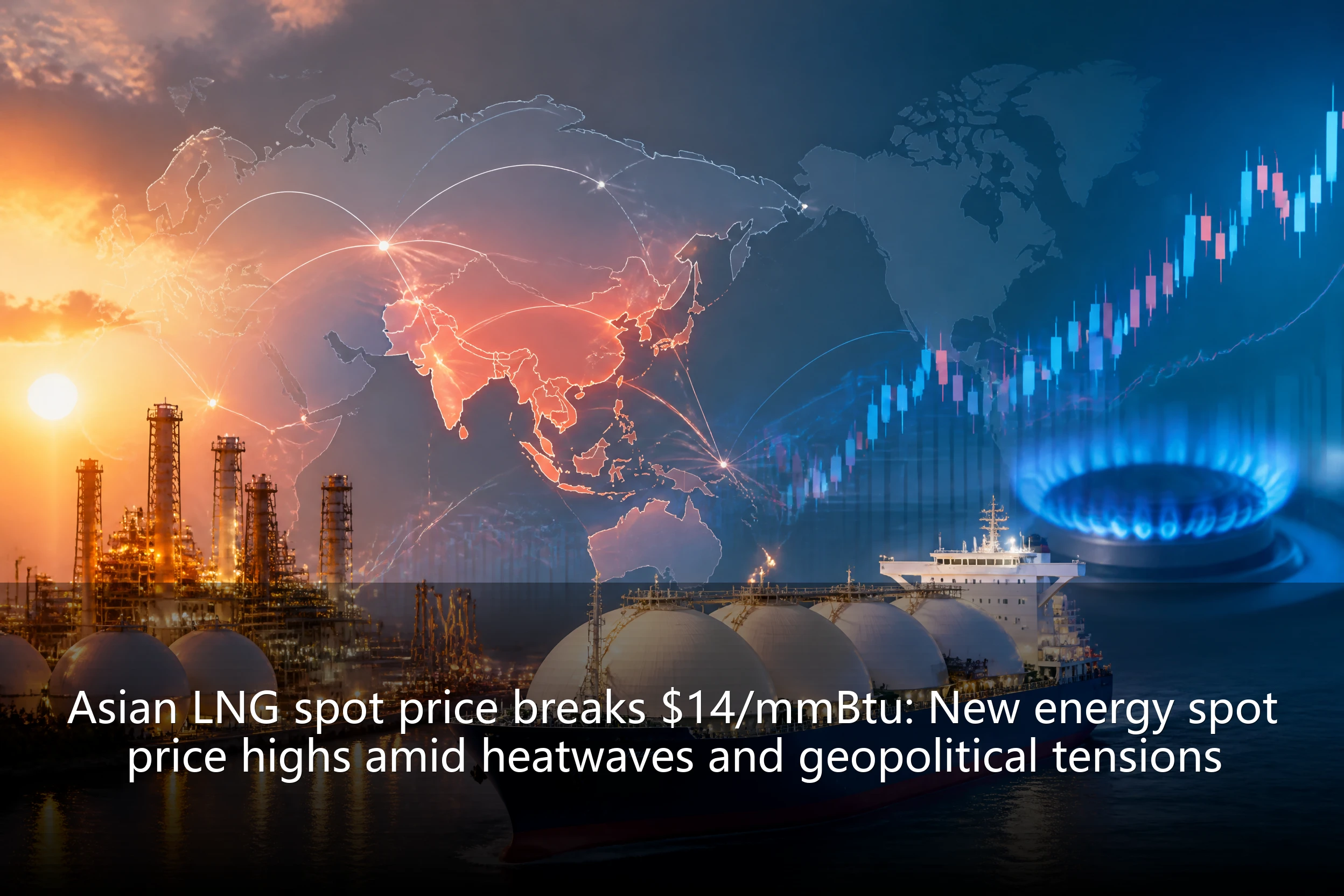
In the first half of 2026, Asian energy prices showed a fluctuating upward trend. Oil prices, influenced by geopolitical factors, once exceeded $90 per barrel; natural gas prices fluctuated significantly due to supply-demand relationships and seasonal factors; coal prices, affected by changes in Chinese demand and Indonesia's production increase policies, showed a trend of first falling then rising.
Notably, the continuous decline in new energy costs has enabled it to compete with traditional energy in some markets. Photovoltaic module prices decreased by 15% compared to 2025, and energy storage system costs fell by 20%, making grid parity a reality for new energy in some regions. With technological advancement and economies of scale, there is still room for further cost reduction in new energy.
Investment Opportunities and Risks in the Asian Energy Market in the Second Half of 2026
Looking ahead to the second half of 2026, the Asian energy market will face multiple investment opportunities. Firstly, the new energy sector will maintain high growth momentum, especially photovoltaic, energy storage, and hydrogen industries will experience explosive growth; secondly, the clean and efficient use of traditional energy will also bring investment opportunities, such as carbon capture and storage technologies, coal-fired power flexibility upgrades; thirdly, energy digitalization and intelligence will become new growth points, with innovative models like virtual power plants and energy internet gaining rapid development.
However, investors should also be vigilant about potential risks. Geopolitical tensions may lead to energy supply disruptions, causing sharp price fluctuations; policy adjustments during the energy transition process may pose risks to investment returns; the rapid iteration of new energy technologies may lead to the obsolescence of early-stage investments.
Investment Strategy Recommendations
Facing the complex Asian energy market, investors should adopt diversified investment strategies to disperse risks and seize opportunities. Firstly, focus on leading new energy enterprises with technological advantages and economies of scale, especially in photovoltaic, energy storage, and hydrogen sectors; secondly, pay attention to transformation opportunities in traditional energy enterprises, such as integrated energy service providers and energy internet platforms; thirdly, focus on investment opportunities in energy infrastructure, such as smart grids and energy storage power stations.
In addition, investors should closely monitor policy changes to seize investment opportunities driven by policy orientation; pay attention to technological innovations to grasp industrial changes brought by technological breakthroughs; follow regional cooperation progress to seize market opportunities brought by regional integration.
Conclusion
In the second half of 2026, the Asian energy market will continue to present a development situation of both opportunities and challenges against the backdrop of global energy transition. The rapid development of new energy, the clean and efficient use of traditional energy, and the digitalization and intelligence of energy will jointly shape the new landscape of the Asian energy market. Investors should seize this historic opportunity and actively participate in Asian energy market investments with controllable risks to share the dividends brought by energy transition.
With the continuous improvement of energy policies and continuous innovation in energy technologies across Asian countries, the Asian energy market will embrace broader development space. In the future, Asia is expected to become an important engine for global energy transition, leading the new direction of global energy development.