Global Natural Gas Consumption Expected to Decline: Middle East Situation and Market Dynamics
Keywords: Natural Gas Consumption, Middle East Situation, Strait of Hormuz, IEA, Energy Security
Introduction
In July 2026, the IEA's latest report dropped a bombshell on the global energy market: due to supply cuts from Middle East tensions and demand suppression from sustained high gas prices, global natural gas consumption is expected to fall 0.5% this year, equivalent to 20 billion cubic meters. This seemingly small figure reflects deep fractures in the international energy landscape. As carbon neutrality transitions intertwine with geopolitical turmoil, natural gas's role is becoming increasingly nuanced—it is both a 'transition fuel' for clean energy and a 'strategic weapon' in great power competition. The sharp drop in LNG shipments through the Strait of Hormuz sounds an alarm, reminding us that energy security is never an abstract concept but a real challenge closely entwined with geopolitics, economic cycles, and climate policy.
1. Middle East 'Powder Keg' Ignites Natural Gas Supply Crisis
The Middle East has always been the 'heart' of the global energy market, and the Strait of Hormuz is the most important artery of this heart. Data shows that the strait previously carried about 20% of global LNG shipments. However, the escalating US-Iran conflict has put this energy artery at unprecedented risk of blockage. Since early 2026, Iran's Revolutionary Guard has held multiple military exercises near the Strait of Hormuz, and the US Fifth Fleet has also stepped up patrols in the waters. The potential for 'accidental fire' has sent shipping insurance premiums soaring, with ship owners diverting or postponing voyages. The sharp drop in LNG shipments directly impacts supply stability in major Asian and European consuming countries.
The IEA report points out that the deterioration of the Middle East situation is not only reflected in transport disruptions but also in declining execution rates of long-term contracts. Although countries like Saudi Arabia and Qatar are not directly involved in the conflict, as major regional gas producers, their export routes are highly dependent on the Strait of Hormuz. If the strait is effectively blocked, these countries, even with ample capacity, cannot effectively deliver resources to the international market. This 'supply chain vulnerability' was exposed once after the 2022 Russia-Ukraine conflict; now the Middle East upheaval again makes countries realize: the globalization narrative of the gas market is being rewritten by geopolitical fragmentation.
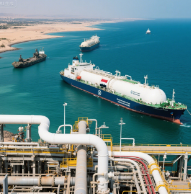
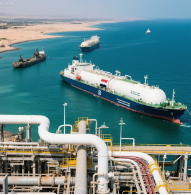
Figure caption: The Strait of Hormuz is a vital chokepoint for global LNG shipments; current conditions show significantly reduced traffic.
2. High Prices: The Economic Logic Behind Demand Suppression
If the supply side is manipulated by an 'invisible hand,' then the price side is a glaring 'scissors.' International natural gas prices have been climbing since the second half of 2025. The European benchmark TTF index rose about 35% year-on-year in Q1 2026, and Asian spot prices also remained high. High prices act as an invisible barrier, keeping a substantial portion of potential demand out of the market.
In the industrial sector, gas-intensive industries in Europe such as fertilizers, chemicals, and steel are hit first. German chemical giant BASF admitted in its H1 2026 report that natural gas costs account for over 40% of its production costs, forcing some plants to cut or even halt production. Emerging Asian economies are also under pressure: India, Pakistan, and other countries have had to reduce LNG imports during peak summer demand, turning instead to increased coal and oil use—clearly contradicting global carbon neutrality goals. The IEA estimates that price suppression accounts for about 60% of the total consumption decline, with supply disruptions contributing the remaining 40%.
Notably, the high prices are not simply due to supply-demand imbalance. Speculation in natural gas futures by financial capital, a 'fear premium' for geopolitical risks, and rigid demand from inventory replenishment cycles have all contributed to price elasticity. When natural gas becomes a 'financial asset' like oil, its price signals no longer fully reflect real economic demand.
3. Reshaping the Global Natural Gas Market Structure
This consumption decline is not an isolated event but a microcosm of deep structural adjustments in the global natural gas market. Over the past decade, explosive growth in LNG capacity led the market to assume 'ample supply' was the norm. Australia, the US, Qatar, and others launched LNG projects, boosting global liquefaction capacity from 300 million tons in 2015 to about 450 million tons in 2025. However, capacity expansion did not eliminate the bottleneck of 'accessibility'—natural gas still heavily depends on specific transport corridors and infrastructure.
The Middle East situation exacerbates this structural contradiction: Asian buyers' dependence on Middle Eastern LNG is as high as 40%. Although Europe has tried to reduce reliance on the Middle East by increasing US and Russian pipeline gas, tightening global methane emission standards and reduced investment by US shale gas companies due to low returns continue to pressure the supply side. The IEA predicts that if Middle East tensions persist until the end of 2026, the global LNG market could face a supply gap of about 15 billion cubic meters—roughly matching the forecast consumption decline, suggesting the market is in a tense 'tight balance.'
Meanwhile, policy responses from major consuming countries are also reshaping the market. Japan and South Korea are accelerating nuclear plant restarts to compensate for gas shortfalls; Germany has extended the operating life of some coal plants; China, the world's largest LNG importer, is hedging external risks by expanding long-term contract volumes, developing domestic gas exploration, and adjusting its 'coal-to-gas' policy rationally. These measures may ease gas price pressure in the short term, but in the long run, they could slow the energy transition, creating a vicious cycle of 'geopolitical risk → high gas prices → return to fossil fuels.'
4. Future Outlook: The 'Deglobalization' Paradox of Energy Security
The most profound lesson from this gas consumption decline may be that energy security is shifting from 'globalized cooperation' to 'regionalized self-preservation.' After the Cold War, the international energy market adhered to the concept of free markets and mutual dependence, believing that trade and investment could spread risk. But the Russia-Ukraine conflict and the Middle East upheaval have successively proven: when supply and consuming countries fall into geopolitical opposition, market mechanisms quickly fail, and energy weaponization becomes the norm.
For consuming countries, short-term countermeasures include expanding strategic reserves, signing more long-term contracts, and increasing alternative energy sources (e.g., LNG from Africa, the East Mediterranean, Canada). But these are stopgap measures because global backup liquefaction capacity is very limited, and new capacity construction takes 5-7 years. The more fundamental solution lies in accelerating energy structure diversification, especially large-scale deployment of renewables and nuclear power. IEA data shows global renewable power generation capacity grew 12% in the past year, but its share of total energy consumption remains below 20%, far from enough to offset the impact of gas fluctuations.
On the other hand, Middle Eastern gas-producing countries also need to reflect on the strategic risk of 'over-reliance on a single strait.' Saudi Arabia, the UAE, and others are exploring land-based pipeline export routes, such as negotiating cross-land LNG pipelines with Pakistan and India; Qatar is trying to lock in market share by expanding the North Field and developing new offshore gas fields. But these efforts face challenges of investment cost, technical difficulty, and political trust among neighboring countries.
Conclusion
A 0.5% consumption drop, a 20 billion cubic meter gap—these numbers may be masked by short-term market fluctuations, but this IEA report should be regarded as a solemn warning: the global natural gas market stands at a crossroads. Will it continue along the old path of 'globalization and marketization,' allowing geopolitical storms to shake energy security foundations? Or will it decisively shift to a new track of 'diversification and low-carbon,' using structural transformation to counter systemic risks? The answer concerns not only the fate of natural gas but the energy future of all humanity. Above the waves of the Strait of Hormuz, amid the digital jumps of gas prices, we are witnessing the end of an old era and the dawn of a new one—and this new era requires strategic vision beyond short-term profit and collective action across borders.