Title: Fed New Chair's Debut Looms: Market Tested by Oil, Rates, and AI Valuation Resonance
Keywords: Fed, Rate Hike Expectations, Oil Prices, AI, Stock Market Risk, Valuation Pressure, Inflation
Introduction: The Market at the Intersection of Macro and Narrative
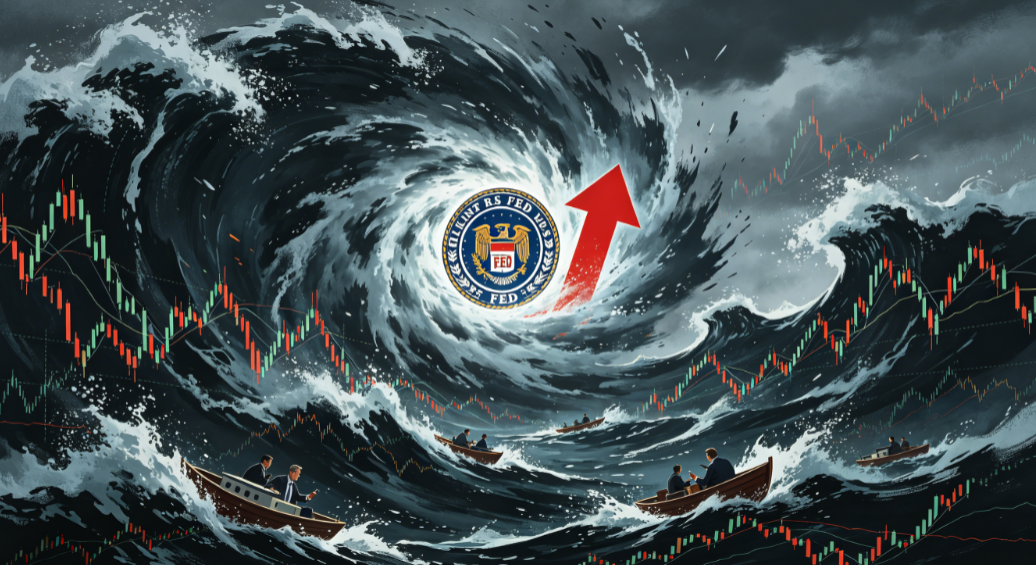
This Wednesday, new Fed Chair John Walsh will face his first FOMC meeting. At this critical juncture, the market is not truly relieved by the short-term risk mitigation. On the contrary, Nohshad Shah, Head of EMEA Fixed Income Sales at Citadel Securities, reminds investors that as the Fed gradually approaches a potential rate hike cycle, coupled with a prudent reassessment of AI economic returns, risk assets may be entering a more fragile phase.
I. Why the Current Environment Resembles a Mix of 'Internet Bubble + 1970s Inflation'
Shah compares the current market backdrop to a combination of the turn-of-the-century internet bubble and the 1970s oil inflation shock, a judgment with a cautionary tone. Both historical periods show that when valuations rely on strong narratives while the macro environment turns adverse, markets are most prone to imbalance.
Before the internet bubble burst, monetary tightening, rising oil prices, and slowing growth jointly squeezed risk appetite; in the 1970s, soaring energy prices and runaway inflation weakened the Fed's ability to support the economy, ultimately leading to a prolonged stock market downturn. Now, high inflation stickiness, labor market resilience, and still-high oil prices force the market to reprice a 'higher for longer' rate path.
II. AI Narrative Still Strong, but Valuation Pressure Emerges
Over the past year, AI has been a major theme supporting US stocks, especially the tech sector. But Shah points out that market judgment on AI is shifting from 'limitless future' to 'reality check.' If AI service pricing drops and customers become more cost-sensitive, it suggests that technology diffusion may not quickly translate into stable profits as expected.
In other words, AI is not without prospects, but capital markets may have overestimated its short-term monetization ability. Once revenue growth disappoints, coupled with rising oil prices and interest rates tightening financial conditions, high-valuation assets will face more obvious drawdown pressure.
III. Lagged Effects of Oil and Rates: A Greater Concern
Research by veteran Wall Street investor Jim Paulsen reinforces this judgment. His model shows that sustained high crude oil prices and bond market volatility over several months tend to drag down economic growth only after several quarters. The Citigroup Economic Surprise Index shows current actual data beats expectations, but the policy pressure index is approaching highs, meaning the combined constraints of oil prices, yields, and dollar strength are accumulating.
More worryingly, the damage from oil shocks usually occurs 'after prices peak.' That is, even if crude stops rising, its lagged suppression on consumption, corporate costs, and market sentiment will gradually emerge in autumn.
Conclusion: Beware the Risk of 'Good News Priced In, Bad News Lagged'
On the surface, easing geopolitical conflicts, stock market rebounds, and bond market repairs seem to send optimistic signals. But underneath, inflation, rates, oil, and AI valuations are forming new resonance pressure. For investors, the real risk to guard against is not a single shock, but multiple variables converging on asset prices within the same time window.
At this stage, the market's greatest danger is not pessimism, but overconfidence that 'growth narratives can offset all macro constraints.' History has repeatedly shown that when fundamentals and the macro environment diverge, the seemingly strongest optimistic expectations are often the first to crack.