Behind South Korea's 'Black Tuesday': How Single-Stock Leveraged ETFs Amplify Market Volatility
Keywords: South Korea stock market, KOSPI, single-stock leveraged ETF, Samsung Electronics, SK Hynix, leveraged trading, market risk
Introduction: A Sudden Drop, Reflecting What Market Structure?
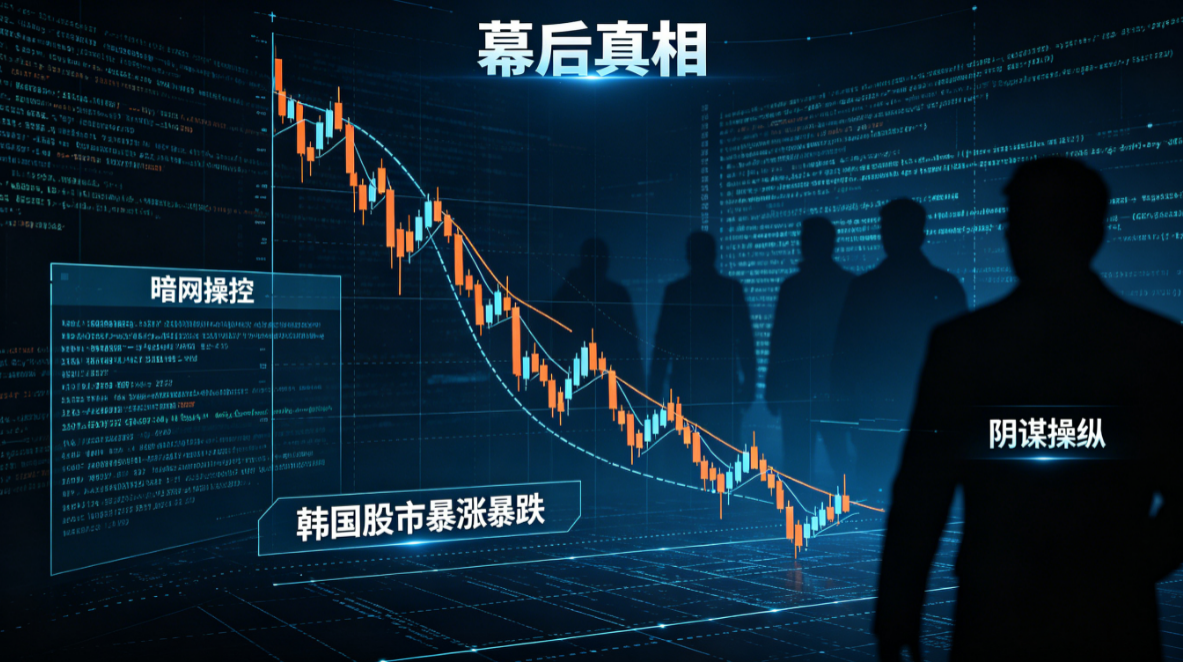
On June 23, South Korea's stock market staged a typical 'Black Tuesday.' In the afternoon, the Korea Composite Stock Price Index (KOSPI) plummeted 8% at one point, triggering a circuit breaker, and eventually closed down 9.99%, the largest single-day drop since March 4 this year. Meanwhile, the two major tech heavyweights Samsung Electronics and SK Hynix plunged 12.31% and 12.47% respectively, both recording their worst performances in years.
This was not simply an emotional correction but a concentrated exposure of the high leverage, high concentration, and strong speculative characteristics of South Korea's capital market. On the surface, the trigger was regulatory criticism of single-stock leveraged ETFs; at a deeper level, it was the result of high tech valuations, overheated margin trading, and concentrated profit-taking.
1. Regulatory Stance Triggers 'Cooling Expectations'
On June 22, the Financial Supervisory Service of South Korea issued harsh criticism of single-stock leveraged ETFs tracking Samsung Electronics and SK Hynix, arguing that these products, aside from allowing securities firms to profit from trading, have no significant positive effect on the market or investors, and may instead expose retail investors to higher risks.
The core reason for such vigilance by regulators is that single-stock leveraged ETFs are not ordinary index funds but concentrate risk on a single stock and amplify price changes through leverage. In other words, they do not 'smooth' market volatility but 'amplify' it. When large amounts of capital flow into such products, already volatile tech stocks are pushed further up; once the market turns, the decline is also magnified synchronously, forming a vicious cycle.
According to estimates from the Financial Stability Authority of Korea, the commission scale related to single-leveraged products could reach $3 billion to $6.4 billion. Regulators are concerned not just about short-term volatility but about the long-term distortion of market pricing mechanisms, investor behavior, and financial stability caused by this trading structure.
2. What is a Single-Stock Leveraged ETF? Why is It So Dangerous?
Literally, a single-stock leveraged ETF is 'a fund that tracks only one stock and has an amplifying effect.' For example, if a single-stock leveraged ETF tracking Samsung Electronics is set at 2x leverage, when Samsung rises 2%, the ETF may rise 4%; if Samsung falls 3%, the ETF may fall 6%.
The characteristics of such products are very distinct:
First, returns are amplified, but losses are also amplified;
Second, they have strong short-term trading attributes and are not suitable for long-term holding;
Third, they easily serve as accelerators of market sentiment.
In an upward market phase, investors are often attracted by 'high returns' and ignore the risks behind leverage; once market volatility intensifies, stop-loss, redemption, and panic selling quickly form a chain reaction, driving prices further down. That is, single-stock leveraged ETFs are not a 'byproduct' of the market but an important variable that can affect the market's own operating rhythm.
3. Why Does the South Korean Stock Market Frequently Experience Sharp Volatility?
The sharp adjustments in the South Korean stock market are not a single-day event but the result of accumulated long-term structural characteristics.
1. Overweight Tech Leaders, Amplified Index Elasticity
Samsung Electronics and SK Hynix are not only core assets of the South Korean stock market but also important weight stocks in KOSPI. Once tech stocks fluctuate significantly, the index is quickly pulled. At the same time, the global AI boom and the recovery of the memory chip cycle have further raised expectations for these companies, forming a positive feedback loop of 'earnings expectations - capital influx - valuation increase.'
2. Excessive Gains This Year, Concentrated Profit-Taking Pressure
After the sharp drop on June 23, the cumulative gains of the South Korean stock market this year remain considerable. The substantial profits accumulated earlier led to many funds taking profits at high levels. Once regulatory signals, external conditions, or sentiment changes appear, selling pressure quickly concentrates and triggers a rapid index-level retreat.
3. Nationwide Stock Trading and Margin Trading Increase Market Vulnerability
South Korea has a population of only about 51.6 million, but active securities accounts exceed 102 million, indicating extremely high market participation. More alarmingly, one in every three stock transactions in South Korea is related to margin trading. High participation does not equal high-quality pricing; if combined with excessive leverage, the market moves from a 'wealth effect' to a 'fragile structure.' When rising, everyone believes in the trend; when falling, the stampede comes faster.
4. Global Risk Spillover Cannot Be Ignored
This earthquake in the South Korean market is not just a domestic issue but also a warning for global investors.
First, the long-short divergence in global AI and memory chip sectors may further widen. As an important participant in the global memory chip industry chain, sharp fluctuations in South Korea's leading stocks often affect risk appetite and valuation benchmarks in related global sectors.
Second, the uncertainty of the Fed's policy path remains a key external variable. If U.S. monetary policy tightens again in the future, rising interest rates will suppress valuations of global growth stocks, with tech stocks bearing the brunt, and high-elasticity markets like South Korea are more vulnerable to shocks.
Third, the correlation between U.S. stocks, Japanese stocks, and South Korean tech stocks is increasing. Investors cannot look at a single market alone but must examine earnings expectations, liquidity changes, and cross-market sentiment transmission within the same framework.
Conclusion: Behind the High-Leverage Boom, Risk Pricing Cannot Be Avoided
South Korea's 'Black Tuesday' illustrates a simple but important truth: when the market is built on high valuations, high leverage, and high sentiment, prosperity itself breeds risks. Single-stock leveraged ETFs are not the source of volatility but its amplifier; tech stocks can rise, but in an environment of excessive capital concentration and speculative trading, any disturbance can evolve into a systemic retreat.
For investors, what really warrants caution is not the sharp drop itself but the market structure issues exposed behind it. In the future, whether the AI industry logic, the memory chip cycle, or global liquidity changes, they will all continue to affect the South Korean market. Facing such a market, staying respectful, controlling leverage, and valuing the match between valuation and fundamentals are key to avoiding becoming the 'pass-the-parcel' last holder.